

Build a practical fishing outfit for sun, wind, rain and cool conditions. Compare three exact layer examples and check fit with the gear you use.
- Use Fishing Clothing and Apparel for Canadian Waters to match species behaviour, habitat, season, and presentation to Canadian water conditions
- Check local regulations before fishing; limits, closures, bait rules, and licences can vary by province and waterbody
- Focus on practical setup: where to fish, what to cast or troll, how deep to work, and when to move
Bottom line Fishing Clothing and Apparel for Canadian Waters gets simpler when you pair current rules with the right habitat, timing, and presentation
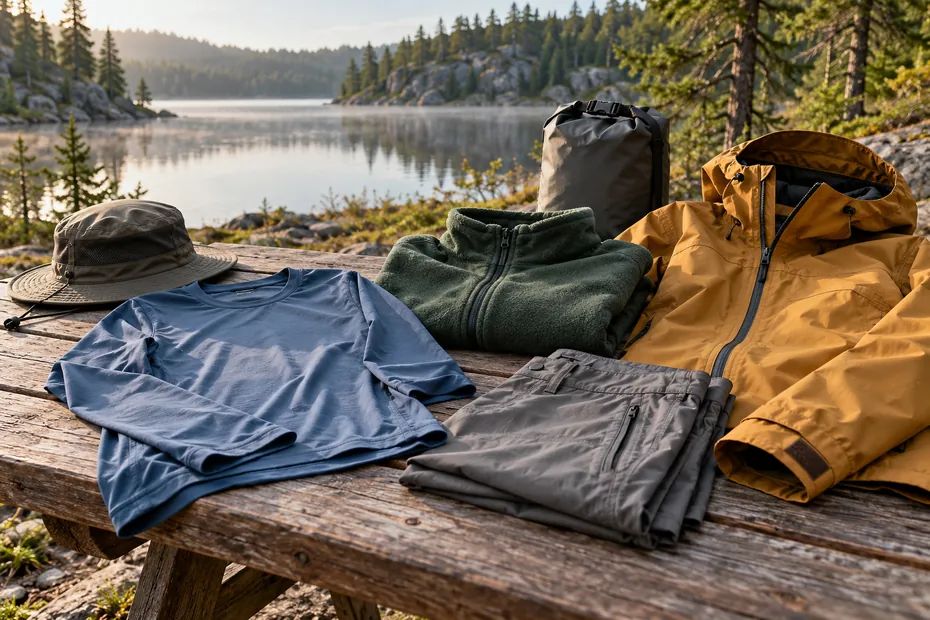
Fishing clothing and apparel for Canadian waters should match the wind, rain, sun and activity of your actual trip. Choose layers you can adjust: a comfortable next-to-skin layer, insulation when needed, and an outer layer suited to the weather.
A warm walk to a sheltered pond and a long, exposed boat ride can need different clothing on the same day. Start with the forecast, water access and time outside. You may already own useful pieces; buy only what your existing kit lacks.
Choose fishing clothing and apparel by the layer’s job
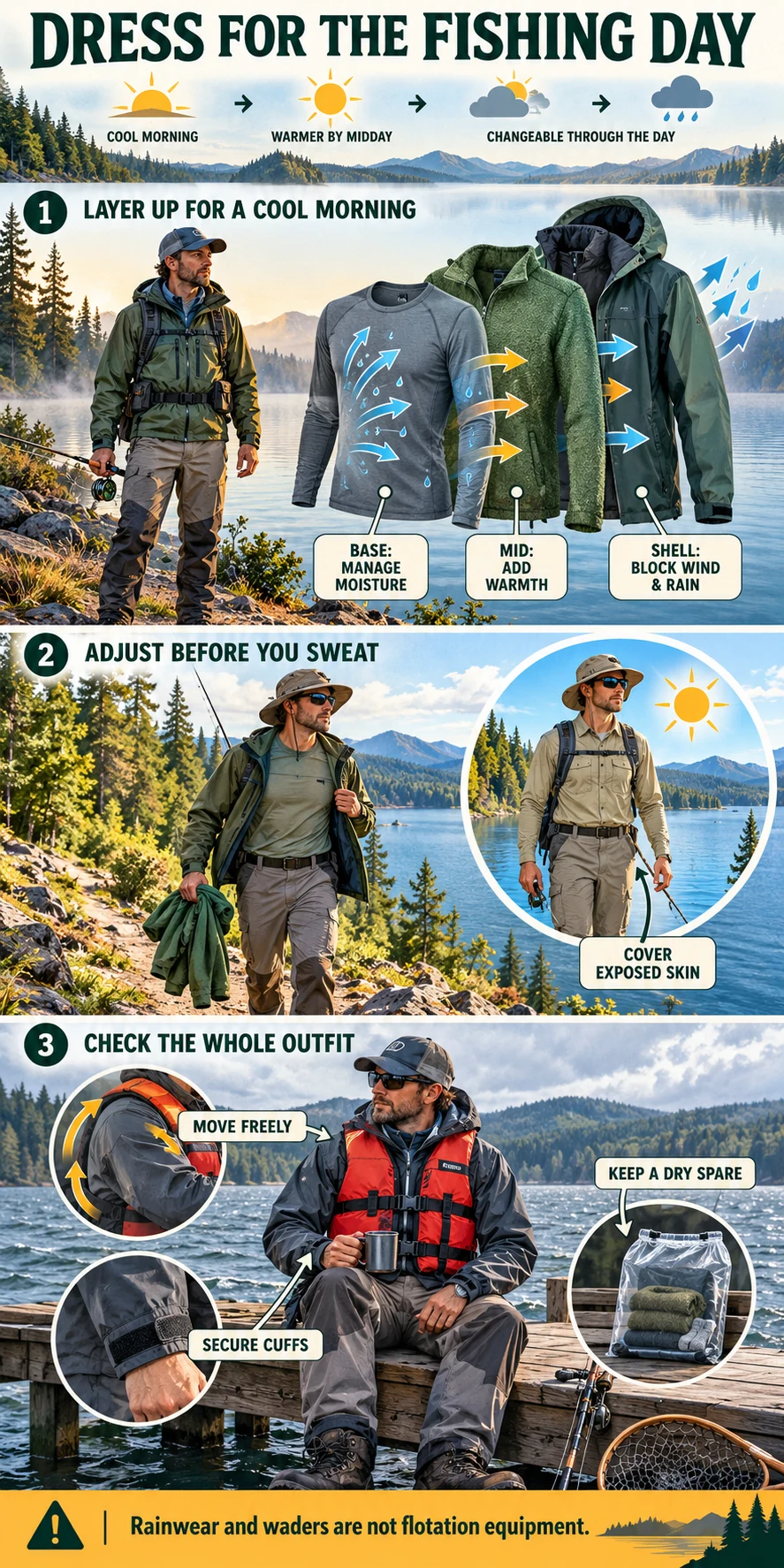
The layer next to your skin needs to be comfortable through movement and changes in temperature. In cool conditions, choose suitable wool or synthetic material that manages moisture. An insulating middle layer adds warmth, while the outer layer deals with wind and rain.
You do not need to wear every layer all day. Open or remove a layer before a walk makes you excessively sweaty, then put insulation back on when you stop and cool down. Keep removed clothing dry and accessible.
| Layer or function | What to check | Common mistake |
|---|---|---|
| Next to skin | Comfort, moisture management and coverage | A damp cotton layer in cold conditions |
| Insulating middle | Warmth, fit beneath the shell and easy removal | Bulky layers that restrict casting or compress together |
| Weather shell | Wind/rain protection, seams, hood and cuffs | Assuming a water-repellent finish seals the whole garment |
| Sun coverage | Covered areas, actual UPF label and exposed skin | Using a shirt’s rating as protection for bare hands or face |
The Canadian Centre for Occupational Health and Safety’s cold-clothing guidance explains adjustable layers, moisture control and avoiding compressed insulation. Its workplace guidance informs those general clothing principles; it does not give this outfit a recreational fishing temperature rating.
Check fishing clothing and apparel with your other gear
Try the layers together. A shell that fits over a thin tee may pull across the shoulders over fleece. Check sleeve reach, the waist when seated and the hem when you bend. Size labels alone cannot tell you whether a particular combination works.
- Raise and extend your arms as you would while casting.
- Sit down and bend forward without exposing your lower back or forcing the zip.
- Check hood visibility with your hat and eyewear.
- Try the outfit with the PFD, waders or carrying straps you will actually use.
The guide’s log: packing for a changing day
This is a hypothetical editorial planning example, not a product test or a report of a trip we made.
If I were preparing for a cool morning at an accessible Ontario lake, I would check more than the afternoon temperature. I would look at wind, rain and how long I expected to sit still, then lay out the clothing for the approach and the fishing session.
I would start with a comfortable synthetic or wool layer, add insulation for the cool start and pack a weather shell. I would try that combination while reaching forward and sitting down. If the shoulders pulled tight or the sleeves rode up, I would try a different fit before leaving.
During the walk, I would open or remove an unnecessary warm layer before it became damp with sweat. Once settled at the water, I would put it back on if I needed it. A dry spare would stay protected inside the bag rather than loose beside wet tackle.
For sun later in the day, I would keep appropriate coverage and a hat within reach. Before the return, I would check whether the wind or rain had changed. I would buy another garment only after identifying what the existing combination failed to do, such as allowing movement over insulation or covering my legs in rain.
Three pieces with different roles
These are specification-based examples, not a tested head-to-head ranking or a complete all-weather kit. Each solves a different clothing need. The linked examples use men’s sizing; choose an appropriate cut and consult the size chart for your own measurements and layers.
As an Amazon Associate, CanadaFever earns from qualifying purchases. These links open Amazon.com. Confirm the selected size, colour, seller, Canadian delivery, currency and total shipping/import cost before paying.

For sun coverage
Columbia PFG Terminal Tackle long sleeve
The 1388261 shirt uses polyester fabric with a published UPF50 rating and sweat-wicking features. Compare it for lightweight long-sleeve coverage when warmth from a fleece would be unnecessary.
- The linked selection is men’s Large, black with a cool-grey logo.
- Long sleeves cover the arms; a crew neck leaves other areas to protect separately.
- Quick-drying fabric is not a waterproof shell or an insulating winter layer.
Check the fit in casting position and follow the garment care label. A different colour or size needs to be selected deliberately in the seller’s options.
Check the Terminal Tackle shirt on Amazon
For removable warmth
Columbia Steens Mountain 2.0 full zip
This 1476671 polyester fleece provides a separate middle layer. A full zip makes it easier to adjust or remove than a pullover when the walk warms you up.
- The linked selection is men’s Large in light grey heather.
- Manufacturer details include polyester MTR filament fleece and zippered hand pockets.
- Use it for insulation and add a suitable shell for rain.
Try it beneath your shell before deciding the size. Do not treat a warm-looking fleece as a complete solution for prolonged cold, wind or wet conditions.
Check the Steens Mountain fleece on Amazon
For wind and rain
Helly Hansen Seven J jacket 62047
The Seven J uses HELLY TECH Protection construction with sealed seams. Its adjustable hood, cuffs and hem provide fit adjustments for changing weather.
- The linked selection is the men’s Medium jacket in black; trousers are not included.
- Manufacturer describes this two-layer garment as waterproof, windproof and breathable.
- It is a general rain shell; it provides no flotation or immersion protection.
Compare a dedicated jacket-and-bib system for sustained exposed boat use. This jacket alone leaves your legs and seat unprotected from rain.
Check the Seven J jacket on AmazonCheck the manufacturers’ Terminal Tackle specifications, Steens Mountain details and Seven J construction and care for the exact product families.
Prepare for sun, rain and time spent still
Sun protection covers more than the shirt
Check the UV forecast as well as the temperature. Choose a hat, suitable eyewear and clothing coverage that work while you cast, bend and sit. A sleeve that rides up or a wide neckline can leave skin exposed even when the fabric has a UPF rating.
UPF describes fabric protection; SPF is the label used for sunscreen. Neither number tells you that every exposed area is covered. Follow the garment instructions and use appropriate protection on uncovered skin.
Health Canada recommends broad-spectrum SPF30 or higher, applied according to the label and reapplied during exposure. It also recommends covering skin and using shade. Do not use a sun shirt as permission to stay exposed indefinitely.
Polarization can reduce glare, but it is a different property from UV protection. Check the actual eyewear protection claim rather than assuming dark lenses or a polarized label settle it. Keep glasses secure and choose a hat that does not obstruct your view.
Water-repellent fabric is not the same as a rain system
A DWR finish helps water bead on a garment’s outer face. It does not, by itself, establish that the jacket’s seams, zips and openings keep rain out. Check the whole garment’s waterproof construction and follow its maintenance instructions.
For repeated rain and spray, inspect the hood, front closure, cuffs and the overlap with trousers or bibs. Sit in the outfit and reach forward. Water can enter at a poorly arranged opening even if the main fabric is waterproof.
Breathability is not a guarantee that you stay dry inside while walking hard. Vent or remove unnecessary insulation before exertion makes you damp, while keeping the needed weather protection. Carry a dry spare when the trip calls for it.
Cool conditions and cold-water exposure are different decisions
A fleece may be useful during a cool shore session, but clothing needs change with wind, rain, duration and how much you move. Sitting in an exposed boat can require a different arrangement from hiking to the water.
Ordinary layers and rainwear are not an immersion-protection system. For paddling or boating in cold water, get advice on suitable activity-specific equipment and wear appropriate approved flotation. A jacket’s warmth, waterproofness and fishing label do not establish immersion protection.
Match footwear, hands and carrying gear to the access
You can fish from an accessible bank without waders. Buy wading equipment because the chosen access requires it and is permitted, then seek suitable instruction for the conditions. Clothing does not make unfamiliar current safe.
For wading, check wader fit and construction alongside the appropriate footwear and local requirements. A boot-foot design and a stocking-foot wader need different footwear arrangements. Leave enough room for the intended socks without compressing your feet.
For winter trips, use the ice-fishing boot comparison for the separate insulation and underfoot needs. Warm boots are not evidence of safe ice. Choose traction and access based on the actual surface and current local advice.
Hands need protection that still lets you control the tackle. A glove that feels warm while standing in a shop may prevent you from operating a reel or opening a clip. Try the movements and consider how you will keep a dry pair available.
- Check reel controls, knot handling and tool access while wearing gloves.
- Choose socks with the boot fit in mind, rather than adding pairs until the boot is tight.
- Keep cuffs and gaiters arranged so they do not block sight, movement or safety equipment.
- Carry wet or dirty gloves separately from dry spare clothing.
Our cold-weather fishing glove guide covers that narrower choice. For carrying layers and tackle, compare fishing backpacks and bags, leaving room for clothing removed during the day.
A fishing vest is optional storage
An ordinary tackle vest is useful if its pockets make your equipment easier to reach. A small pack may do the same job with less material around your torso. Test either arrangement with a casting motion and your outer layer.
Use Transport Canada’s lifejacket and PFD guidance when selecting and using flotation. Check the device’s approved activities and follow its instructions.
The pre-trip protocol: check the clothing in three steps
Plan the whole period outside
Check the local forecast, wind, UV conditions and how long you will walk, sit or travel on the water. Include the trip back. Select clothing for that plan and reconsider the outing when the conditions exceed your preparation.
Try the complete combination
Wear the intended layers with footwear, gloves and safety equipment. Reach, sit and turn your head. Adjust the system if it binds, exposes skin or blocks important equipment.
Pack a dry change and accessible adjustments
Protect spare clothing from rain and wet tackle. Keep the shell or warm layer reachable without emptying the bag, and leave space for anything you take off during the walk.
| What you notice | Check first | Useful adjustment |
|---|---|---|
| Warm and sweaty on the approach | Too much insulation for the activity | Vent or remove a layer before it becomes wet |
| Chilled while sitting still | Wind exposure, damp layers and insufficient insulation | Add suitable dry protection or shorten the session |
| Shoulders pull during a cast | Combined layer fit and carrying straps | Change fit or remove unnecessary bulk |
| Wet lap despite wearing a jacket | Missing lower-body weather coverage | Use suitable trousers or bibs and check overlap |
Try the casting position with your actual outfit, especially a longer fishing rod. Keep clothing purchases tied to practical gaps in the complete fishing kit.
Use what you own and care for each fabric
A sound fleece, comfortable outdoor trousers and a suitable rain shell can already form part of a fishing wardrobe. Check their condition and fit before replacing them with fishing-branded alternatives. Spend first on a missing function such as rain coverage or suitable sun protection.
Follow each garment’s own care label. Washing instructions for a fleece can differ from those for a technical shell, and a generic waterproofing treatment may be unsuitable. Inspect seams, closures and worn areas before the next trip.
- Empty pockets and remove hooks or sharp tackle before washing clothing.
- Dry garments as instructed before storing them for a long period.
- Keep a wet shell or dirty footwear away from spare dry layers in the car.
- Recheck measurements, intended layers and return terms before ordering another size.
For mosquitoes and other biting insects, use suitable physical coverage and follow the instructions on any repellent you choose. Do not assume a lightweight shirt or ordinary gaiter is insect-proof, and do not apply treatments to fabric without checking both labels.
Fishing clothing questions
Do I need fishing-branded clothes?
No. Suitable outdoor pieces can work when they provide the coverage, moisture management, warmth and weather protection your trip needs. Check fit and condition. Buy specialised clothing when it solves a specific problem.
Is a UPF50 shirt enough sun protection?
Its rating applies to the fabric, not skin left uncovered. Use appropriate coverage, a hat, UV-protective eyewear and sunscreen on exposed skin according to Health Canada’s guidance and the product label. Seek shade when possible.
Can I use a fleece as a rain jacket?
The selected Steens Mountain fleece is an insulating piece. It does not replace waterproof rainwear. Add a suitable shell and lower-body protection when the conditions require them.
Are waders and a fishing vest essential?
Waders are an access choice, and an ordinary tackle vest is optional storage. You can fish from suitable accessible banks without them. Neither item replaces approved flotation or makes unsafe water access acceptable.
Will these three garments cover winter boat or ice fishing?
They are examples of separate functions, not a certified cold-weather or immersion system. Choose the full outfit for the conditions, duration, activity and access. Specialist footwear, hand protection, insulation and safety equipment may be needed.