
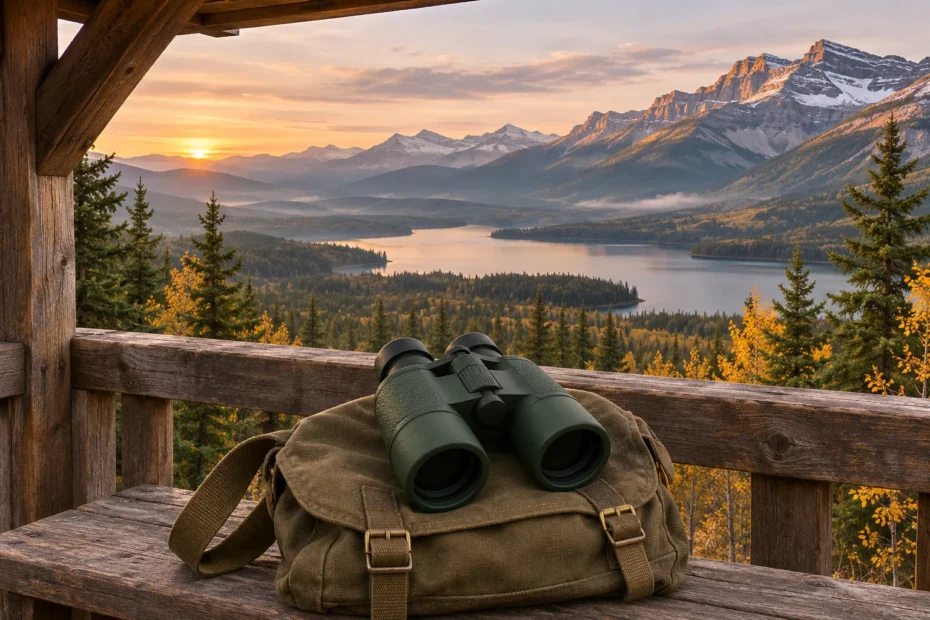
Scouting with Binoculars in Canada: Choosing Optics and Reading Terrain
Choose binoculars or a spotting scope for scouting in Canada. Compare 8×42 and 10×42, set your focus and scan woods, valleys and wetlands.
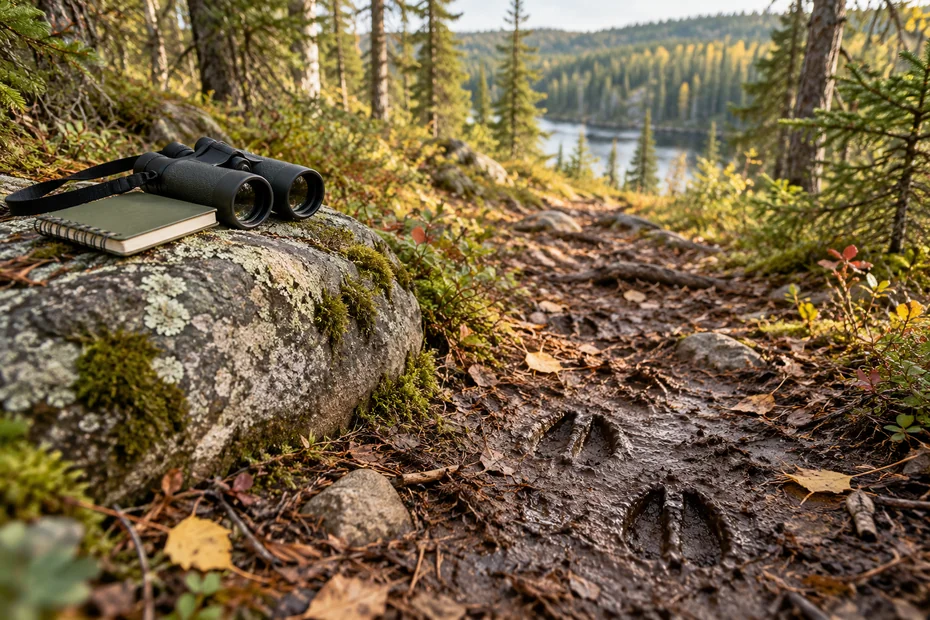
Wildlife tracking and scouting techniques help you describe the signs an animal left and decide which guide to read next. Start with an observation you can record from a safe position: a print pattern, disturbed ground or an animal seen through binoculars. An uncertain identification is a useful result when the evidence is incomplete.
This collection brings together track reading, field notes, navigation and observation equipment. The topic illustration does not identify a species.
Updated 28 October 2026.
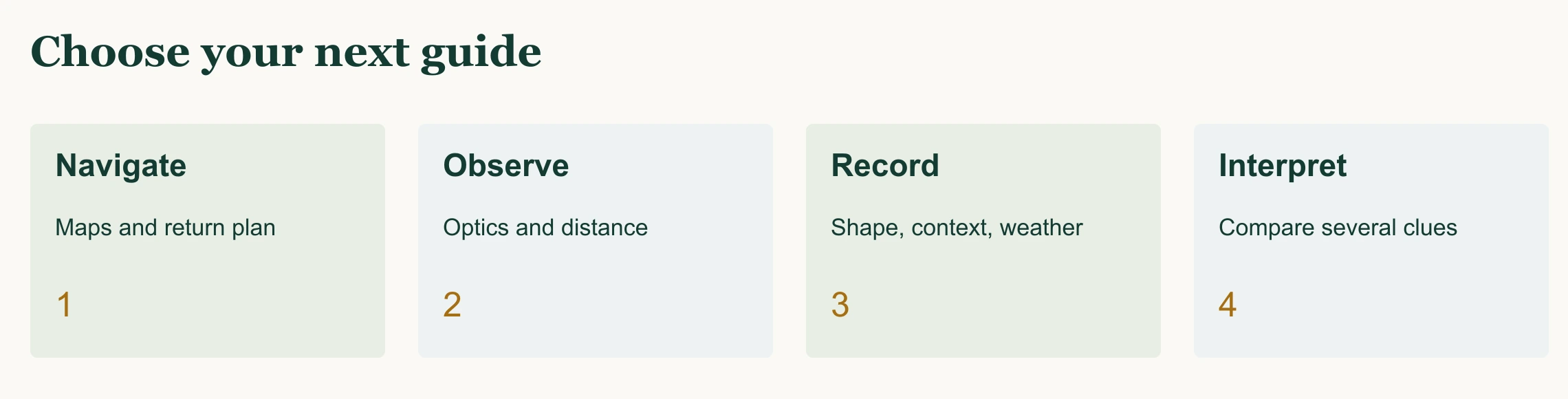
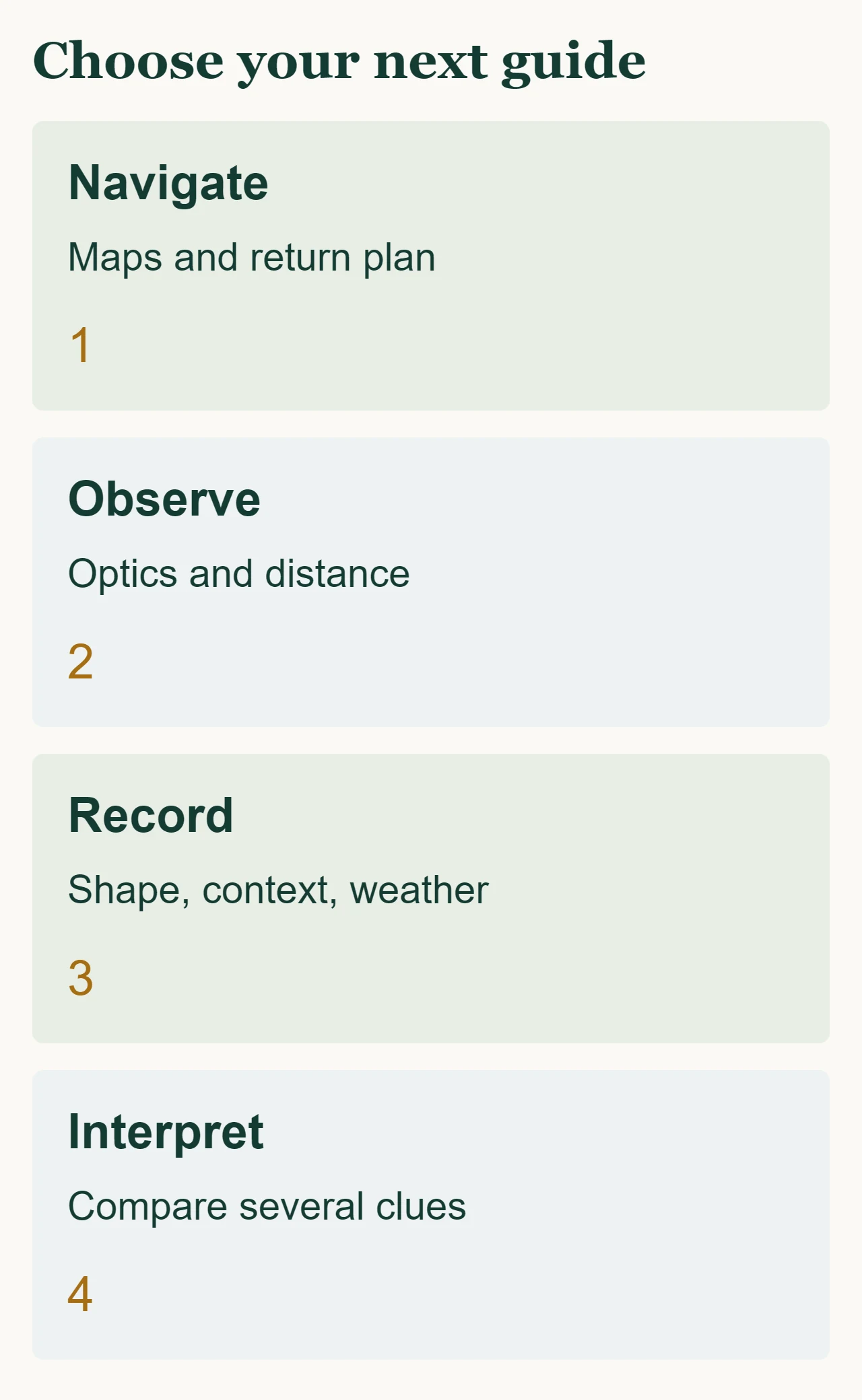
Open the full-size reading pathOpen the full-size reading path
You can stop at any of these stages. A short note saying “paired impressions in soft mud; species uncertain” preserves what you saw without turning a guess into an identification.
A clear footprint answers a different question from a weathered trail. Aging animal tracks explores weather, substrate and changes to print edges. Treat these as comparison clues; a footprint does not carry a reliable timestamp.
Read scat and other animal signs when tracks occur beside feeding marks or droppings. Record what is visible without handling scat or disturbing the site. Several kinds of evidence may support a description while still leaving the species uncertain.
The wild-pig rules and reporting guide is a separate route for possible pig sightings. Its photographs and worked note show how to preserve uncertainty and choose a provincial reporting channel.
The trail-camera setup guide covers cameras and recording arrangements. Before placing anything, check the land manager's rules, obtain any required permission and consider who else could enter the frame. A camera does not grant access to private land or protected habitat.
For the broader monitoring context, tracking for conservation introduces research technologies. Reading about a drone or monitoring system does not authorise its use at your destination. Organised surveys and sensitive-species projects need their own methods and permissions.
Parks Canada's wildlife guidance is a starting point for park visits. Check the destination's current instructions as well. Do not follow fresh signs towards an animal, den or occupied resting place to complete an identification.
If you are looking for an organised viewing outing, use the bear-watching planning guide. Observation, research and hunting involve different decisions; the presence of tracks alone supplies none of the permissions for those activities.
For a park-based outing, compare bison viewing spots by their public access and local viewing rules. For a hosted stay, the Indigenous-operated lodge guide separates accommodation, transfers and activities. An indoor wildlife visit is another format, with managed habitats and venue-specific tickets.
The article collection below continues beyond this starting path. Choose a topic by the question you need answered, and check destination-specific access and wildlife instructions before applying field advice.

Choose binoculars or a spotting scope for scouting in Canada. Compare 8×42 and 10×42, set your focus and scan woods, valleys and wetlands.
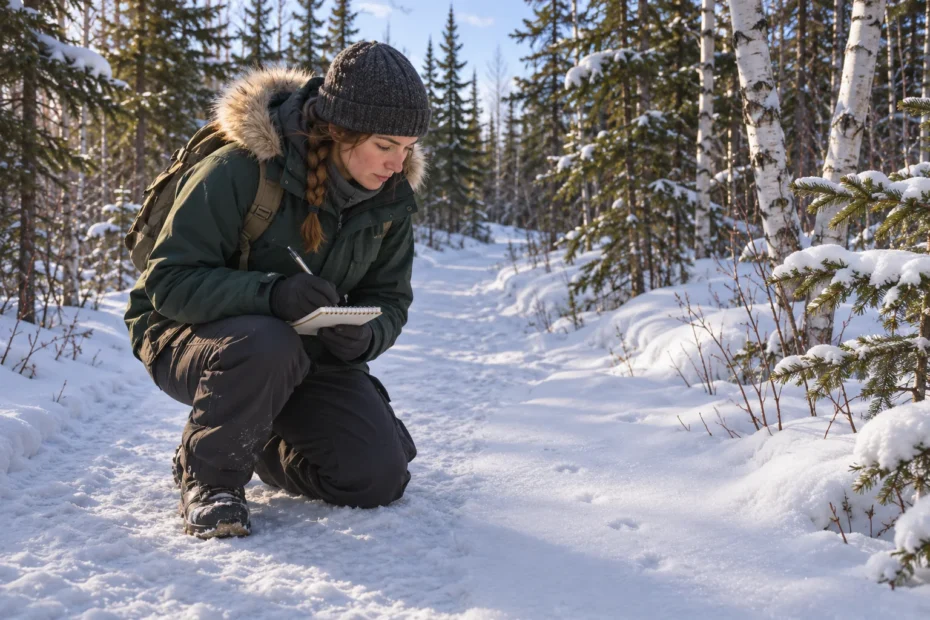
Compare paws, hooves and trail patterns in Canadian wildlife tracks. Use field examples and a clue selector to identify what you see with more confidence.
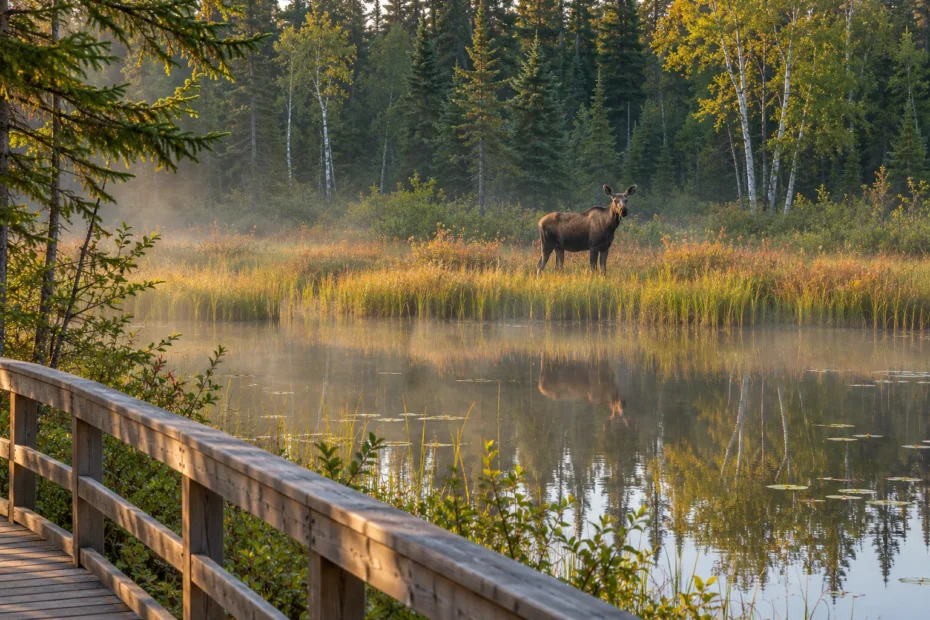
Find wildlife around Canadian ponds, creeks and marshes. Choose a safe lookout, read water levels and tracks, and compare what you see over time.
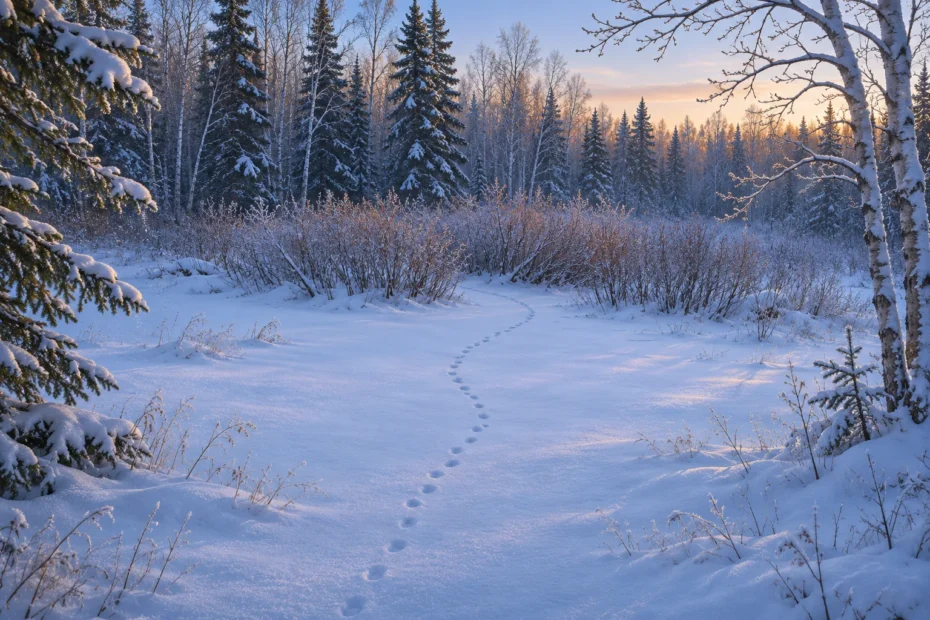
Read wildlife trackways in Canada. Compare changes in gait, travel routes, possible feeding and resting signs, and work through five field examples.
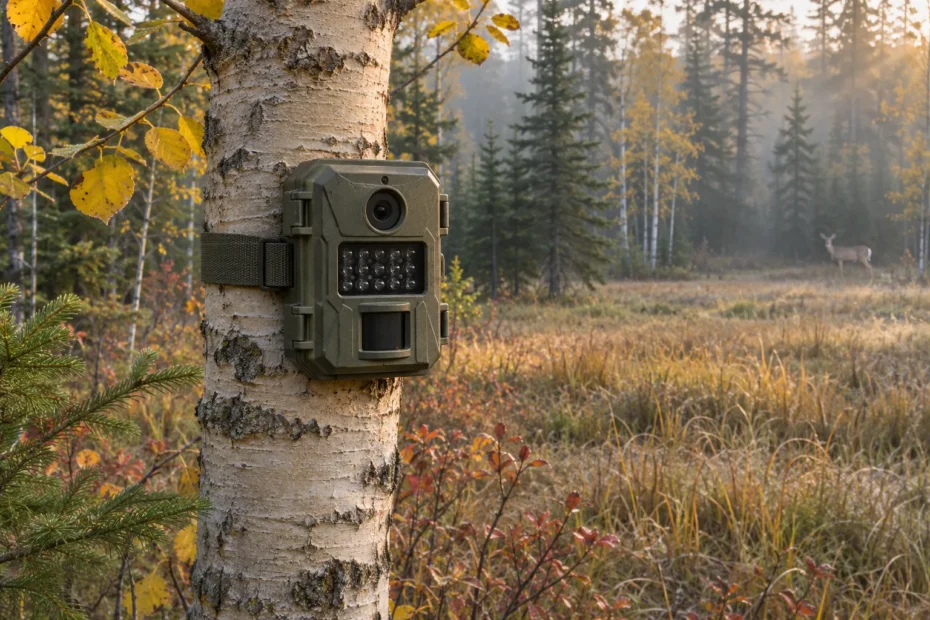
Set up a trail camera for wildlife scouting in Canada. Check permission, test the angle, fix empty frames and read what the camera actually recorded.
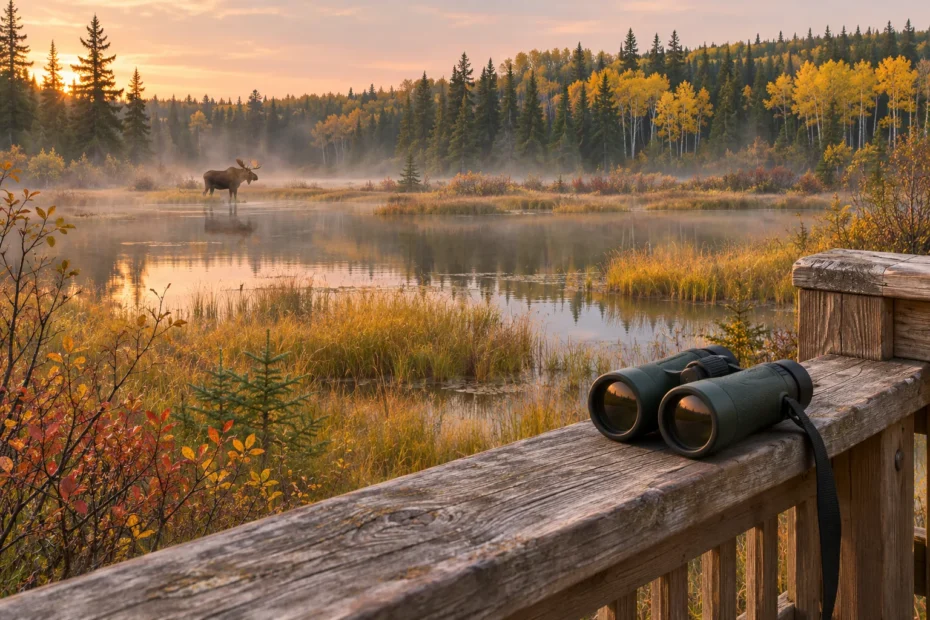
Watch wildlife in Canada from a safe distance. Learn where to stop, how to recognize signs of disturbance and when to leave, with three worked… Read More »How to Watch Wildlife in Canada Without Disturbing It
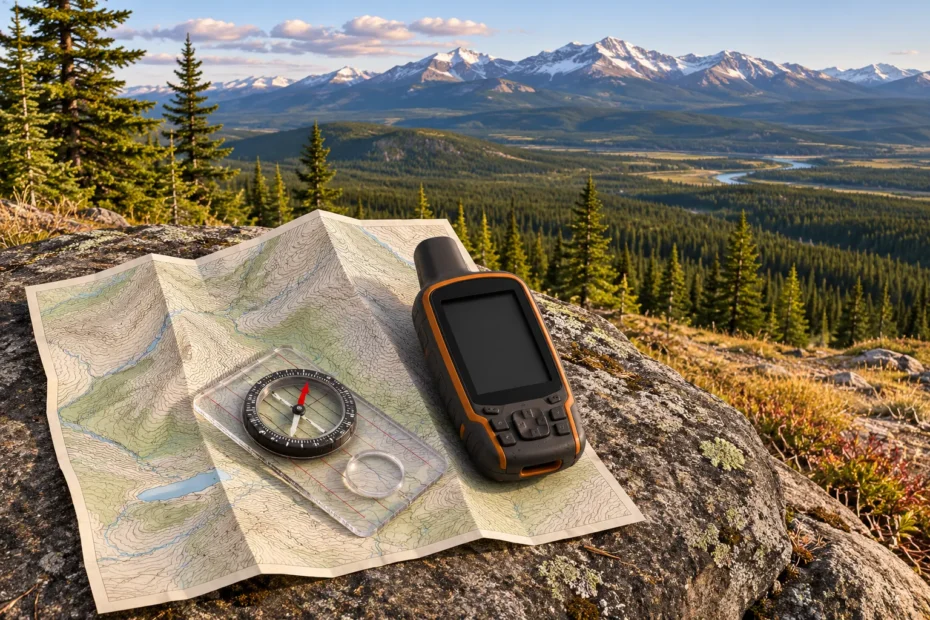
Plan a wildlife scouting route in Canada with topo maps, a compass and GPS. Test offline maps, read terrain and check access before heading out.
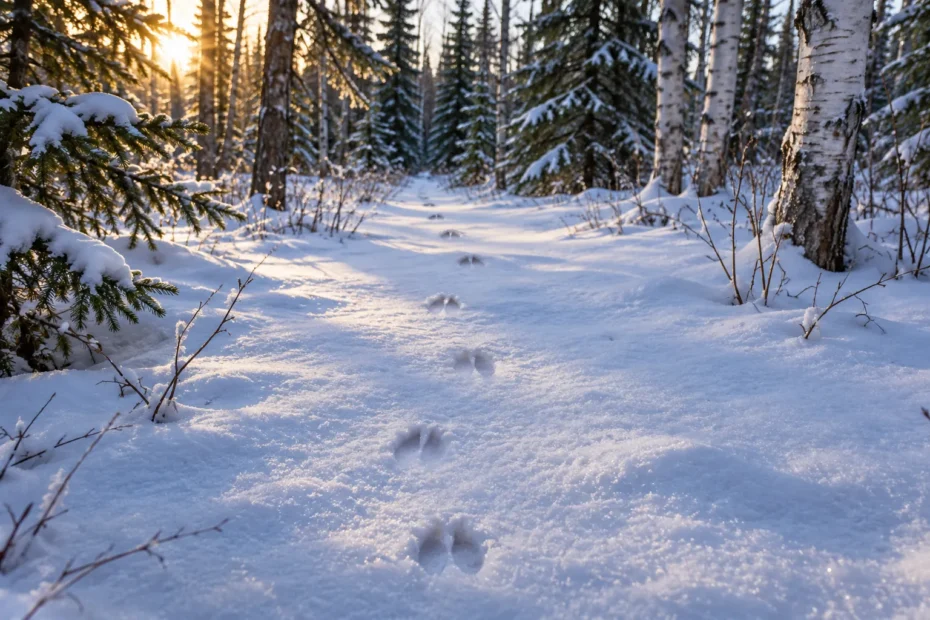
Learn to age animal tracks in snow and mud. Compare weather, surface and overlapping prints to build a defensible time window in the field.
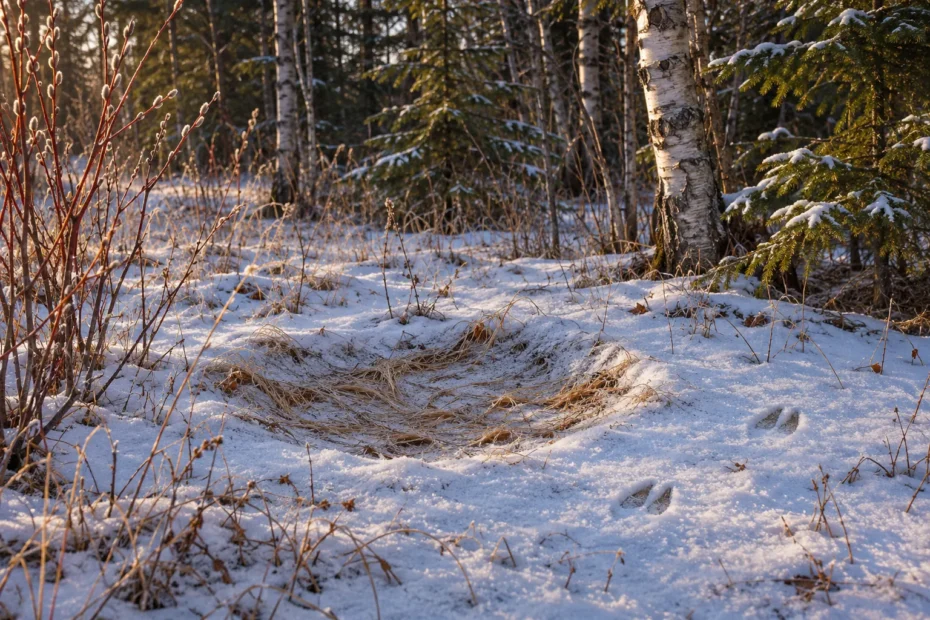
Learn to identify possible wildlife beds and feeding areas in Canada. Compare tracks, browsed stems and other clues without disturbing animals.
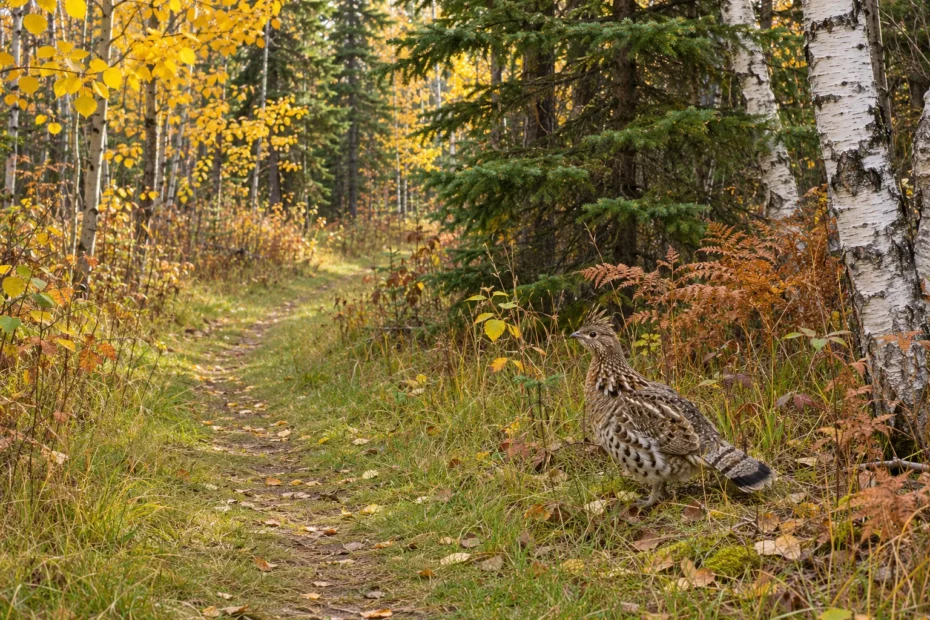
Plan a scouting walk for hare, grouse, woodcock and waterfowl in Canada. Compare habitat and signs, keep field notes, and verify access before returning.